Louis C. Stamberg was a public servant, international development expert, loving husband, and caring parent whose influence transcended his titles. He was born in Allentown, Pennsylvania, on November 15, 1936, and lived a life of education, compassion, Jewish community, and service. He died of metastatic pancreatic cancer in Washington, D.C., on October 9, 2007, at 70.
Louis was not a famous person. He worked in government offices, overseas development initiatives, community organisations, and family living rooms. However, his acquaintances recalled him well. They described a calm, knowledgeable man who listened, considered before speaking, and gave counsel without taking center stage. His calm demeanour hid a sharp mind and a great desire to help developing nations.
Early Life and Family Roots
Louis was raised in Allentown, Pennsylvania, by Jewish parents who valued education, civic duty, and religion. His father, Louis M. Stamberg, was a lawyer and Coplay Cement executive. A local temple was founded and led by him to create Jewish community in Allentown.
That background helped shape Louis C. Stamberg’s understanding of responsibility. His family valued intellectual curiosity, but education was never treated as a private achievement alone. It was connected to service, community leadership, and the obligation to help others.
Louis followed his father to Columbia University and Harvard Law School. He turned down a law career despite his qualifications. He became a public servant and worked on international economic development instead of law.
A Career in International Development
Louis joined America. USAID throughout his early marriage. Retirement came in 1995 after a 30-year career. He planned, implemented, and evaluated developing country economic and infrastructure plans.
One of his main duties was in India. He and Susan spent two and a half years in Delhi early in their marriage. Louis promoted economic growth while Susan wrote Voice of America reports. India was a pivotal moment in their relationship.
Professional duties carried him to Thailand, Afghanistan, Gabon, Chad, the Congo, and other African countries. He helped the Africa Bureau with programs that required patience, judgement, and understanding complex local realities.
International development work can be difficult to measure in simple terms. It often involves years of planning, negotiations, training, and institution building before results become visible. Louis brought what colleagues described as gentle understanding and dauntless energy to that process. He was interested not only in policies, but also in the people affected by them.
His work was practical and ambitious. He helped support the construction of infrastructure and the development of systems intended to give communities greater economic stability. He was not drawn to personal recognition. For him, the value of the work rested in whether it served a useful purpose.
Marriage to Susan Stamberg
Louis met Susan Stamberg while they were both in the Boston and Cambridge area. He was studying law at Harvard, while she was pursuing graduate studies and beginning her journalism career. They married in Manhattan in 1962 and soon moved to Washington, D.C.
Their marriage lasted 45 years, until Louis’s death. Together they navigated demanding careers, international assignments, parenthood, public attention, and illness. Susan became one of the best known voices in American public radio, while Louis maintained a much more private professional profile.
Susan praised Louis regularly. She remembered his thoughtfulness, intelligence, and ability to listen without judging. She also remembered that his upbringing made being Jewish harder than in larger places. He greatly supported Jewish life, which inspired the family.
Louis insisted that their son Josh be bar mitzvahed. The request was not merely ceremonial. It reflected his belief that family identity, memory, and community should be carried forward through action.
Susan Stamberg’s NPR Legacy
Susan Stamberg joined National Public Radio in 1971, before the network had fully established its national identity. She became one of its foundational figures and was widely regarded as an NPR founding mother.
In 1972, she became co host of All Things Considered. Her appointment made her the first woman to anchor a national nightly news program in the United States. For 14 years, she helped shape the program’s tone, combining serious reporting with warmth, curiosity, humor, and conversation.
Susan valued natural voices over polished ones. She advised reporters to convey individuality, doubt, and emotion. Her interviews covered politics, economics, theatre, music, literature, gastronomy, and life. She interviewed Rosa Parks, Fred Rogers, Dave Brubeck, and Milton Friedman.
From 1987 to 1989, she hosted Weekend Edition Sunday. During that period, she helped bring Car Talk to national listeners and launched the Sunday Puzzle with Will Shortz. She later continued as a special correspondent, particularly covering arts and culture.
Her annual Thanksgiving feature on Mama Stamberg’s Cranberry Relish became a beloved NPR tradition. The recipe, made with cranberries, sour cream, onion, and horseradish, was as memorable for its unusual ingredients as for Susan’s playful presentation.
Louis supported Susan’s career without competing with it. He understood the demands of journalism and accepted the visibility that came with her work. Their partnership was complementary. Her public voice reached millions, while his work quietly supported communities around the world.
Fatherhood and Josh Stamberg
Louis and Susan had one child, Josh, who was born in Washington, D.C., around 1970. Josh Stamberg became an actor, writer, and producer, eventually working in television, film, and theater.
Josh remembers his father as a provider and great listener. Louis was a quiet intellectual who read widely, followed the Washington Post and New York Times, and thought carefully about family talks. He was not a room-master. He made people believe their words mattered.
The relationship between father and son remained close as Josh entered the acting profession. Louis supported his son’s career even though it differed greatly from his own. He visited sets, encouraged Josh’s creative work, and took pride in his accomplishments.
Family life included simple traditions such as neighborhood walks, holidays, reading, and time with the family dog, Hotspur. These ordinary moments carried special meaning because Louis found pleasure in attention rather than spectacle.
Josh wed actress Myndy Marie Crist. The Los Angeles couple had two daughters, Vivian Stamberg and Lena. Louis died before his first grandchild was born, never meeting them. Josh has discussed that loss and honoured his father in their family.
Retirement, Volunteering, and Lasting Service
After retiring from USAID in 1995, Louis did not withdraw from public life. He continued to serve through volunteer work and nonprofit leadership. He became chair of Pact, an international development organization, and colleagues honored his wisdom, judgment, and decency.
His post retirement interests reflected his character. He took French lessons, studied cooking, traveled with Susan, and read to blind people. These activities combined learning with usefulness. He remained curious, but he also looked for ways to make his time beneficial to others.
Louis was diagnosed with pancreatic cancer after suffering from pancreatitis. Doctors attempted a Whipple procedure at Johns Hopkins, but the disease had already become metastatic. He died in Washington, D.C., on October 9, 2007. His funeral was held at American University’s Kay Spiritual Life Center.
A memorial fund connected with Pact was established in his honor. The fund reflected the values that guided his life: international cooperation, practical service, and respect for the dignity of communities.
Family Memory and Pancreatic Cancer Advocacy
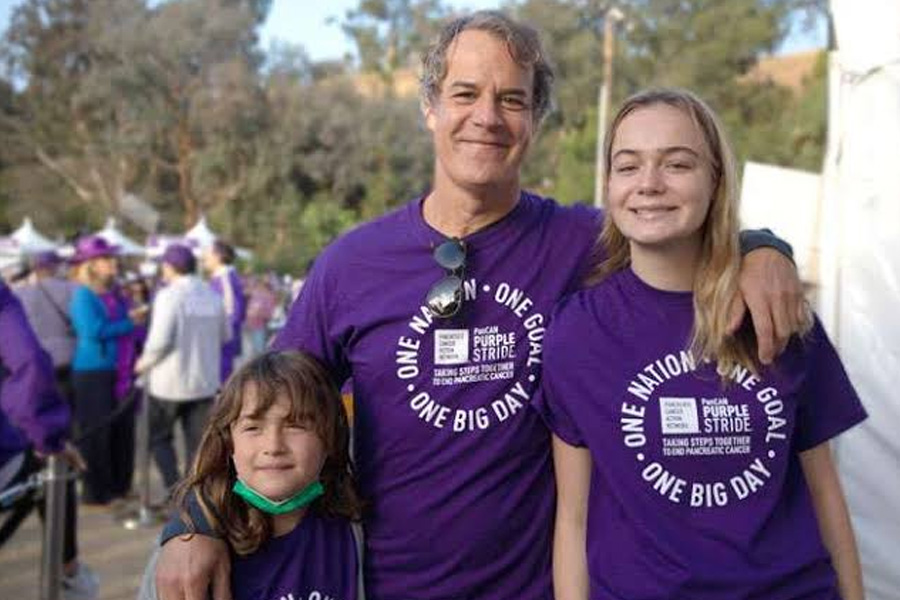
Louis’s death continued to shape his family years later. Josh has participated in pancreatic cancer awareness activities, including PanCAN PurpleStride walks. He has honored his father by involving his daughters in acts of remembrance and service.
Susan also emphasized Louis’s importance in her life. The couple shared travel, family traditions, professional respect, and emotional stability for 45 years. When Susan died in 2025, tributes naturally mentioned Louis, her husband and lifelong partner.
The Stamberg family story links journalism, international development, acting, and community service. Its members followed different paths, but the same values appear repeatedly: curiosity, compassion, education, humor, and the belief that a meaningful life is measured by what one gives.
Frequently Asked Questions
Who was Louis C. Stamberg?
Louis C. Stamberg was an American civil servant and international development specialist who worked for USAID for more than 30 years. He focused on economic development, infrastructure, and program planning in Asia and Africa.
When was Louis C. Stamberg born?
He was born on November 15, 1936, in Allentown, Pennsylvania. Some accounts place his birth around 1937.
Who was Louis C. Stamberg’s wife?
His wife was Susan Stamberg, a pioneering public radio journalist and one of the founding figures of NPR. They married in Manhattan in 1962 and remained together until his death in 2007.
How long were Louis and Susan Stamberg married?
Louis and Susan Stamberg were married for 45 years.
Who was Louis Stamberg’s son?
His son was Josh Stamberg, an actor, writer, and producer. Josh has described Louis as a compassionate father, a thoughtful adviser, and a model of service.
Did Louis Stamberg have grandchildren?
Yes. His grandchildren are Vivian Stamberg and Lena, the daughters of Josh Stamberg and actress Myndy Marie Crist. Louis died shortly before his first grandchild was born.
Where did Louis Stamberg work overseas?
His international development assignments included India, Thailand, Afghanistan, Gabon, Chad, the Congo, and other locations in Africa. He also held responsibilities connected with USAID’s Africa Bureau.
What did Louis Stamberg do after retiring?
After retiring from USAID in 1995, he chaired Pact, volunteered by reading to blind people, studied French and cooking, traveled with Susan, and remained active in community service.
How did Louis Stamberg die?
He died of metastatic pancreatic cancer on October 9, 2007, in Washington, D.C. He was 70 years old.