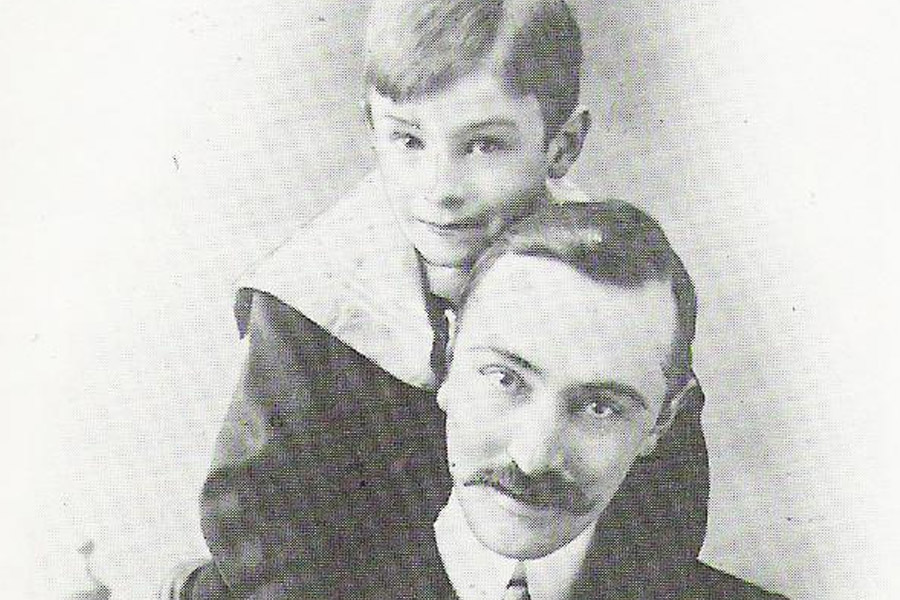
Basic Information
| Field | Detail |
|---|---|
| Full name | Norman Dalziel Warne |
| Birth | 6 July 1868, London, England |
| Death | 25 August 1905 (age 37) |
| Occupation | Editor and publisher |
| Employer | Frederick Warne & Co. |
| Years active | c. 1894–1905 |
| Known for | Championing Beatrix Potter’s early books, especially The Tale of Peter Rabbit (1902) |
| Parents | Frederick Warne (founder of Frederick Warne & Co.); Louisa Jane Fruing Warne |
| Siblings | Harold Warne; William Fruing Warne; Amelia Louise “Millie” Warne |
| Residence | Bedford Square, Bloomsbury, London (with his mother and sister) |
| Marital status | Engaged to Beatrix Potter (July 1905) |
| Reported cause of death | Pernicious anaemia (then described alongside lymphatic leukaemia) |
A Life in Publishing
Norman Warne grew up in a house booked to the rafters—literally and figuratively. As the third son of the founder of Frederick Warne & Co., he absorbed the rhythms of Victorian publishing early, then stepped into the firm in the mid-1890s as his father retired. His older brothers, Harold and William Fruing, shouldered management and sales, leaving Norman to do what he did best: edit, coax, and refine.
By 1900, a persistent author and illustrator named Beatrix Potter had begun corresponding with the house. Warne’s practical eye and sympathetic ear turned initial hesitation into a calculated leap: her privately printed story about a mischievous rabbit deserved a proper life in print. The Tale of Peter Rabbit appeared in 1902 and promptly scampered into tens of thousands of nurseries. Warne, all quiet scaffolding, helped shape its pocket-sized format, its brisk pacing, and its commercial fate.
He was not merely a desk-bound editor. For The Tale of Two Bad Mice (1904), he procured miniature furniture and props to assist Potter’s meticulous illustrations—an early example of editorial creativity that blurred into art direction. He encouraged early merchandising—soft toys, board games, and puzzles—which, for the Edwardian book trade, was a fresh wind at the window. Behind the smiling mice and tidy hedgehogs stood a steady craftsman whose fingerprints were everywhere and signature nowhere.
Family Constellation
Warne’s world orbited his family as surely as it did his work. After his father’s death in 1901, he lived with his widowed mother, Louisa, and his sister, Amelia (“Millie”), in Bedford Square. He was devoted—described as caring for his mother in invalid years—and it likely honed his gentleness, his tact, and his remarkable ease with women in an era when many men were not.
| Family Member | Relation | Notes |
|---|---|---|
| Frederick Warne | Father | Founder of Frederick Warne & Co. (est. 1865); retired in the 1890s; died 1901. |
| Louisa Jane Fruing Warne | Mother | From St. Helier, Jersey; widowed in 1901; shared a Bedford Square household with Norman and Millie. |
| Harold Warne | Older brother | Partner/manager in the firm; kept the company steady post-1901 and after Norman’s death. |
| William Fruing Warne | Older brother | Sales and business development; also liaised with Potter after 1905. |
| Amelia Louise “Millie” Warne | Sister | Unmarried; close to Norman; later an emotional anchor for Beatrix Potter after Norman’s death. |
The siblings functioned like an efficient small press—each with a lane, each enabling the others to move quickly. Norman’s lane was editorial craftsmanship, and within it he found both purpose and, unexpectedly, love.
The Partnership with Beatrix Potter
The professional chemistry between Norman Warne and Beatrix Potter grew by letter, proof, and parcel. Between 1900 and 1905, they built books together at a pace that feels modern: Peter Rabbit (1902), The Tale of Squirrel Nutkin (1903), The Tailor of Gloucester (trade edition, 1903), and The Tale of Two Bad Mice (1904), among others. Notes and sketches flew back and forth; so did tiny props for scale. He read carefully, answered promptly, suggested shrewdly. She responded with sharpened art and tightened prose.
In late July 1905, the private warmth became a promise. Warne proposed on 25 July. Potter accepted—radiantly, by contemporary accounts—despite her parents’ objections to his “trade” background. The ring and the future were real. Within weeks, illness intervened.
Even in this compressed courtship, his editorial touch is clear. He was already at work proofreading The Tale of Mrs. Tiggy-Winkle in 1905. He thought in formats and series, in continuity and charm, in how a young hand holds a small book and feels—somehow—bigger.
Illness and Early Death
Warne’s health deteriorated with startling speed. Diagnosed then with pernicious anaemia—described in some accounts alongside lymphatic leukaemia—he died on 25 August 1905, just 31 days after the engagement. He was 37.
The effect on Beatrix Potter was seismic. Grief reordered her priorities and her geography. Later in 1905, she bought Hill Top Farm in the Lake District—self-determined space, refuge, and renewed wellspring for her art. She remained close to Millie Warne, knitting memory into friendship. The books continued; the quiet collaborator was gone.
Work, Finances, and Daily Life
Warne’s professional life was focused and, by Edwardian measures, modern. He specialized in children’s literature at a time when the category was crystallizing as a commercial force. He advocated for consistent trim sizes and collectible series. He treated illustration as narrative, not ornament. And he looked beyond covers to the broader ecosystem of stories—merchandise, formats, and audience reach.
Financially, he appears to have lived with modest steadiness as part of a successful family firm. There is little evidence of private wealth beyond his partnership stake and salary, and no signs of extravagance. He lived in rooms he shared with his mother and sister, not in clubs; his pleasures seem to have run to workrooms, proofs, and the delicate theater of picture-book production.
Timeline Highlights
| Date | Event |
|---|---|
| 6 July 1868 | Born in London. |
| 1865 | Frederick Warne & Co. founded (family firm that would define Norman’s career). |
| Mid-1890s | Joins the firm as an editor after his father’s retirement. |
| 1900–1901 | Begins sustained correspondence with Beatrix Potter over Peter Rabbit. |
| October 1902 | The Tale of Peter Rabbit published commercially; rapid success follows. |
| 1904 | The Tale of Two Bad Mice published; Warne sources miniature props for illustrations. |
| 25 July 1905 | Proposes to Beatrix Potter; engagement announced. |
| August 1905 | Proofreading The Tale of Mrs. Tiggy-Winkle as his health declines. |
| 25 August 1905 | Dies at age 37. |
| Late 1905 | Potter purchases Hill Top Farm in the Lake District. |
| 2006 | Portrayed in the film Miss Potter, reintroducing him to a global audience. |
| 2024–2025 | Anniversaries of the proposal and death marked by literary societies and enthusiasts. |
Legacy and Recent Mentions
Warne’s legacy is a paradox: the books are famous; the man is faint. Yet his role is indelible. He helped translate Potter’s private imagination into public delight, insisted on the pocket format that made the stories literally graspable by children, and encouraged early licensing that broadened their cultural footprint long before franchises had a name.
His memory surfaces regularly in commemorative rhythms—especially in years that end neatly in fives. Recent posts have marked 25 July (proposal) and 25 August (death), often reflecting on the what-ifs: what might a longer partnership have produced, and how might it have reshaped the Edwardian children’s market? Features about miniature interiors and a doll’s house he built for his nieces have kept his handiwork in view, sometimes showcased alongside National Trust collections that preserve the world Potter made famous. Proposals to mark his former home with a plaque have been floated more than once; none have yet been approved.
There is no scandal here, no controversy to exhume, only a compact life with a large effect. Warne worked quietly; his results did not. The books he midwifed still sell, still comfort, still startle with their brisk candor. His editorial voice—undramatic, precise, companionable—can be heard in their perfect page turns.
FAQ
Who was Norman Warne?
He was a British editor at Frederick Warne & Co., best known for championing Beatrix Potter’s early books and becoming her fiancé in 1905.
What was his role in The Tale of Peter Rabbit?
He helped bring the story to press in 1902, guiding format and production decisions that made it a bestseller.
When did he and Beatrix Potter get engaged?
He proposed on 25 July 1905; she accepted, though her parents objected to his background in trade.
How and when did he die?
He died on 25 August 1905 at age 37, with contemporaneous reports citing pernicious anaemia alongside lymphatic leukaemia.
Did he create any of the props seen in Potter’s books?
He sourced miniature props for illustration reference and supported the creation of a doll’s house for family, echoing details in The Tale of Two Bad Mice.
What was his family background?
He was the third son of publisher Frederick Warne; his siblings Harold, William Fruing, and Millie were closely involved in his life, with the brothers active in the firm.
Was he wealthy?
He appears to have enjoyed stable middle-class means through the family business, with no evidence of substantial personal fortune.
How is he remembered today?
Through the enduring success of Potter’s books, occasional film portrayals, museum and heritage features, and anniversary commemorations in literary circles.